Pakistan pitches U.S.-Iran talks & War spillover: oil and shipping - News (Mar 30, 2026)
Pakistan offers U.S.-Iran talks as war threatens shipping and oil; Supreme Court weighs birthright citizenship; EU returns, AI shifts, and health breakthroughs.
Our Sponsors
Today's Top News Topics
-
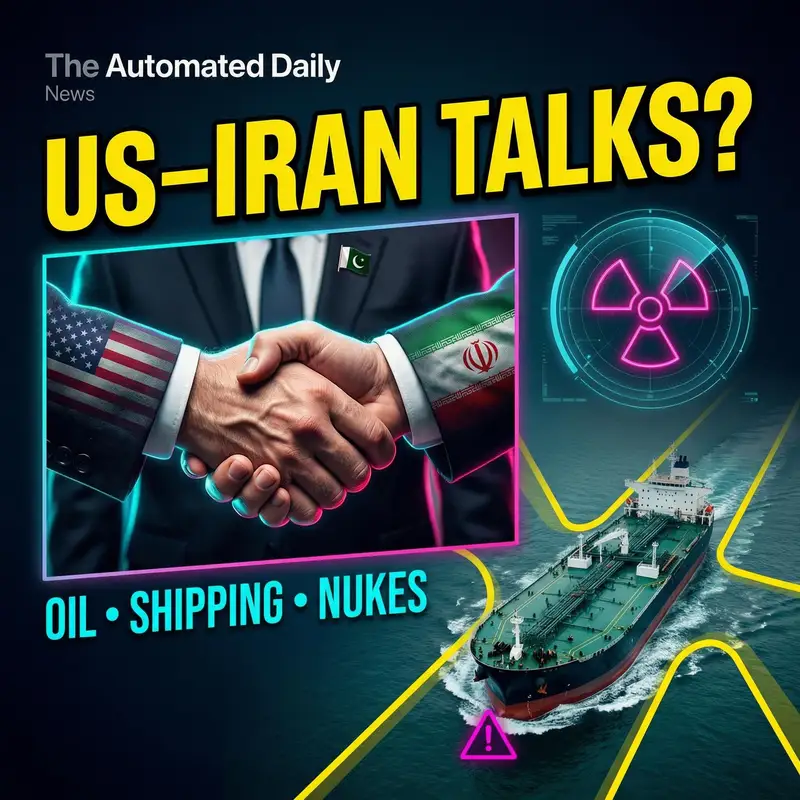
Pakistan pitches U.S.-Iran talks
— Pakistan says it will host de-escalation talks between the United States and Iran as the regional war widens. Key keywords: mediation, Islamabad, Washington, Tehran, ceasefire. -
War spillover: oil and shipping
— The conflict is pressuring energy markets and global logistics, with risks around the Strait of Hormuz and Red Sea routes. Key keywords: oil, gas, fertilizer, shipping lanes, Hormuz, Houthis. -
Nuclear deterrence debate intensifies
— U.S. strikes and rhetoric are fueling arguments that more countries may seek nuclear weapons for deterrence, testing nonproliferation norms. Key keywords: nuclear umbrella, NPT, arms control, Saudi enrichment, proliferation. -
Supreme Court on birthright citizenship
— The U.S. Supreme Court is weighing Donald Trump’s order to limit citizenship for some U.S.-born children, challenging a long-standing reading of the 14th Amendment. Key keywords: birthright citizenship, constitutional law, immigration, jurisdiction. -
EU plans tougher migrant returns
— The European Union is moving toward faster detention and deportation options, including third-country “return hubs,” amid political pressure to curb arrivals. Key keywords: Pact on Migration, return hubs, non-refoulement, border enforcement. -
WTO members advance digital trade
— A large group of WTO members is putting baseline digital trade rules into effect among themselves, sidestepping consensus deadlock. Key keywords: e-commerce pact, plurilateral, WTO reform, India, digital duties. -
Europe builds homegrown AI compute
— France’s Mistral AI is financing major new European computing capacity and a Paris-area data centre, reflecting Europe’s push for data sovereignty and AI autonomy. Key keywords: Mistral, data centre, Nvidia chips, European AI infrastructure. -
Apple may open Siri to AI
— Apple is reportedly preparing a way for third-party AI services to plug into Siri, potentially turning Siri into a gateway for multiple chatbots. Key keywords: Apple Intelligence, Siri extensions, iOS, App Store marketplace. -
Quantum race heats up U.S.-China
— The U.S.-China tech rivalry is increasingly centered on quantum computing, with China’s state-backed funding and the U.S. relying on a broader private ecosystem. Key keywords: quantum, patents, national security, commercialization, 2030. -
North Korea tests stronger rocket engine
— Kim Jong Un oversaw a test of an upgraded solid-fuel rocket engine, a sign North Korea is still improving systems that could threaten the U.S. mainland. Key keywords: solid-fuel, ICBM, multiple warheads, deterrence. -
GLP-1 drugs show broader benefits
— Research suggests GLP-1 weight-loss drugs may also reduce risks for heart, kidney, and liver disease, though some benefits remain uncertain and under study. Key keywords: semaglutide, inflammation, HFpEF, MASH, clinical trials.
Sources & Top News References
- → Pakistan offers to host U.S.-Iran talks as Iran issues threats and fighting widens
- → Supreme Court hears challenge to Trump order restricting birthright citizenship
- → Mistral Secures €750m Loans to Build Paris-Area AI Data Centre
- → Iran War and US Policy Fuel Fears of a Global Nuclear Proliferation Wave
- → WTO Members Move Ahead with Digital Trade Rules via Interim Pact
- → Kim Oversees North Korean Solid-Fuel Engine Test Tied to U.S.-Range ICBM Development
- → Jefferies: China leads quantum scale while U.S. bets on decentralized innovation
- → Report: iOS 27 Siri Extensions could create an AI marketplace in the App Store
- → EU moves to expand deportations and offshore ‘return hubs,’ drawing Trump-style comparisons
- → Studies suggest GLP-1 weight-loss drugs may benefit heart, kidneys and liver beyond weight loss
Full Episode Transcript: Pakistan pitches U.S.-Iran talks & War spillover: oil and shipping
Pakistan says it’s ready to host talks between the U.S. and Iran—while missiles, threats, and a potential squeeze on key shipping lanes keep the region on edge. Welcome to The Automated Daily, top news edition. The podcast created by generative AI. I’m TrendTeller, and today is March 30th, 2026. Here’s what’s shaping headlines—what happened, and why it matters.
Pakistan pitches U.S.-Iran talks
We’ll start in the Middle East, where the biggest question is whether diplomacy can catch up to the speed of escalation. Pakistan says it will soon host talks aimed at cooling the fighting between the United States and Iran, after a monthlong war triggered by U.S. and Israeli strikes on Iran. Islamabad is presenting itself as a go-between with connections on both sides, after meetings involving Turkey, Egypt, and Saudi Arabia. But neither Washington nor Tehran immediately confirmed the plan, and it’s still unclear whether any talks would be direct.
War spillover: oil and shipping
On Iran’s side, the mood being broadcast publicly is defiant. Iran’s parliament speaker dismissed the idea of Pakistan-hosted talks as a “cover,” and officials have issued blunt warnings about retaliation, including personal threats toward U.S. and Israeli figures. At the same time, U.S. Marines have arrived in the region, adding to the perception that the conflict could broaden further before it narrows.
Nuclear deterrence debate intensifies
Israel is also signaling it may press on. It says it intends to widen its ground operation in southern Lebanon to expand a security zone aimed at Hezbollah. That’s a move with immediate human consequences: more displacement, more pressure on local authorities, and rising anger among civilians who feel trapped between armed groups and expanding military operations.
Supreme Court on birthright citizenship
Beyond the battlefield, the economic stakes are climbing. Energy and shipping are once again front and center, because Iran retains leverage over the Strait of Hormuz—a chokepoint that matters for global oil flows—and Houthi involvement keeps risk elevated along the Red Sea corridor. Markets and manufacturers are watching not just crude, but also natural gas, fertilizer inputs, and the reliability of major sea routes. When shipping becomes unpredictable, prices can jump quickly and supply chains can seize up in places far from the conflict.
EU plans tougher migrant returns
One detail that’s especially worrying: the rhetoric around civilian-linked sites is intensifying. Strikes on universities tied to nuclear research, and counter-threats that mention educational institutions, are raising fresh concerns about where lines are being drawn in this war—because once civilian infrastructure becomes normalized as a target, escalation tends to accelerate, not slow down.
WTO members advance digital trade
This all feeds into a second, bigger debate: whether the world is sliding into a more nuclear-armed era. In the wake of U.S. and Israeli strikes on Iran and a tougher posture from Washington, allies in Europe and East Asia are openly rethinking deterrence. In places like Germany and Poland, and in public opinion in South Korea, talk of independent nuclear options is becoming less taboo. Japan’s long-standing political sensitivity around the topic is also being tested.
Europe builds homegrown AI compute
The Trump administration is adding fuel to that conversation by floating the idea of resuming U.S. nuclear testing and pushing new missile-defense plans—steps that nonproliferation officials argue could weaken old guardrails. And Bloomberg reports the White House circulated a report that would support potential Saudi access to sensitive nuclear technologies, drawing accusations of double standards while Iran is being bombed for similar capabilities. Experts warn that if confidence in the Nuclear Non-Proliferation Treaty erodes, the world could see a chain reaction of new nuclear states—raising the risk of miscalculation in future crises.
Apple may open Siri to AI
In the United States, a very different high-stakes fight is playing out at the Supreme Court: birthright citizenship. The justices are hearing arguments over President Donald Trump’s executive order that would deny citizenship to some children born on U.S. soil—specifically those whose parents are in the country illegally or temporarily. The administration argues those parents are not fully “subject to the jurisdiction” of the United States under the 14th Amendment, and therefore their U.S.-born children would not qualify.
Quantum race heats up U.S.-China
Lower courts have repeatedly blocked the order, calling it likely unconstitutional, so the Supreme Court’s decision could be pivotal—not just for immigration policy, but for how the country interprets a core constitutional guarantee. Researchers estimate more than 250,000 babies a year could be affected, including some born to parents who are in the U.S. legally but in transitional status, such as students or people awaiting green cards. The case is also personal for families: one Argentine mother described rushing to secure a U.S. passport for her baby as the legal fight intensified, treating that document as proof the rules hadn’t changed yet.
North Korea tests stronger rocket engine
Across the Atlantic, the European Union is moving in the opposite direction on migration enforcement—toward a tougher, faster approach. Under the EU’s Pact on Migration and Asylum, set to take effect June 12, the bloc is exploring expanded tools to detain and deport migrants, including sending rejected asylum-seekers to “return hubs” in third countries. Supporters argue it’s a response to political pressure and fears of another surge like 2015. Critics warn it risks eroding legal safeguards and could collide with protections against sending people back into danger, known as non-refoulement. Italy’s offshore detention model in Albania is being cited as a template, and other countries are weighing similar arrangements.
GLP-1 drugs show broader benefits
In global trade, the World Trade Organization is seeing a workaround that reflects a bigger frustration: consensus rules can freeze progress. A group of WTO members has agreed to bring into force baseline digital trade rules among participating countries, even without full WTO-wide adoption. The deal—focused on making digital commerce more predictable—has been blocked in the past by opponents including India, which argues trade rules should be adopted multilaterally by consensus. Participating members represent a large share of global trade, and the move increases pressure on the WTO to find a path that doesn’t let a few holdouts stop everything. Notably, the U.S. still hasn’t joined and is reviewing its position, while a separate dispute over whether to keep banning customs duties on digital transmissions remains stuck, especially between the U.S. and India.
Now to AI and tech—where two stories point to the same theme: countries and platforms are fighting over who controls the next layer of computing power. In France, AI company Mistral has secured more than 750 million euros in loans to expand computing capacity and build a new data centre near Paris. It’s a sign that Europe is trying to put serious infrastructure on the ground, not just research on paper. The message from European leaders and businesses is clear: they want more “autonomy,” meaning less dependence on U.S. cloud giants and more control over where data and advanced computing live.
On the consumer side, Apple is reportedly planning to open Siri and Apple Intelligence to third-party AI services through a future “Extensions” feature. If that happens, Siri stops being just one assistant and starts acting more like a switchboard—handing off tasks to different AI providers depending on what you ask. It would also give developers a powerful new way to reach iPhone users, potentially turning AI add-ons into a new App Store battleground.
And looking a bit further ahead, the U.S.-China rivalry is increasingly focusing on quantum computing. A new investor report argues China’s approach is heavily state-directed, with large public funding and coordinated national planning, while the U.S. model is more decentralized—spread across companies, universities, and national labs. In simple terms, China may move faster in the near term because it can line up resources and priorities, but the U.S. could benefit from a broader mix of ideas and experimentation. The report expects commercialization to accelerate later this decade, which is why governments treat quantum as both an economic prize and a national-security issue.
In security news from Asia, North Korea says Kim Jong Un observed a ground test of an upgraded high-thrust solid-fuel rocket engine. Solid-fuel systems matter because they can be launched more quickly and are harder to spot ahead of time than older designs. Analysts see the test as part of an effort to improve missiles that could potentially reach the U.S. mainland—and possibly carry more than one warhead, which would complicate missile-defense planning. Diplomacy has been largely stalled for years, and Pyongyang continues to frame its nuclear status as non-negotiable.
Finally, a health story with real-world implications for millions: GLP-1 weight-loss drugs may be doing more than helping people shed pounds. Research is increasingly linking these medications to benefits across multiple organ systems—such as lower inflammation tied to heart disease, reduced risk of heart attack and stroke, and improved outcomes for a common form of heart failure. Studies also suggest slower progression of chronic kidney disease and potential benefits for serious liver disease, including forms that can lead to scarring. There are even early signals in observational data about reduced cancer risks, though researchers stress that correlation isn’t proof and more work is needed. The takeaway is that these drugs are increasingly being evaluated as broad metabolic treatments, not only as weight-loss tools—and that could reshape how doctors use them over time.
That’s the Top News Edition for March 30th, 2026. The big threads today: diplomacy struggling to keep pace with conflict, courts and governments redefining borders and belonging, and a tech race that’s as much about power and control as it is about innovation. I’m TrendTeller. Thanks for listening to The Automated Daily. If you’re coming back tomorrow, we’ll track whether those proposed U.S.-Iran talks turn into something real—or fade into the fog of war.
More from Top News
- October 6, 2026 Plague lab death in Siberia & Saudi-Türkiye-Pakistan defense pact activated
- October 5, 2026 Iran weighs US ceasefire response & Oil producers hold output steady
- October 4, 2026 Middle East standoff deepens again & Flight scare strands Tel Aviv travelers
- October 3, 2026 Diesel Stocks Hit Markets & Weak US Jobs Surprise
- October 2, 2026 US Pressure Builds on Iran & Iraq Moves Against Militias