Oil shock risks from Iran war & EU naval mission and shipping - News (Mar 10, 2026)
Oil nears $120 as Hormuz stalls, China pivots to tech self-reliance, Japan fields longer-range missiles, and Ozempic shows a surprise addiction link.
Our Sponsors
Today's Top News Topics
-
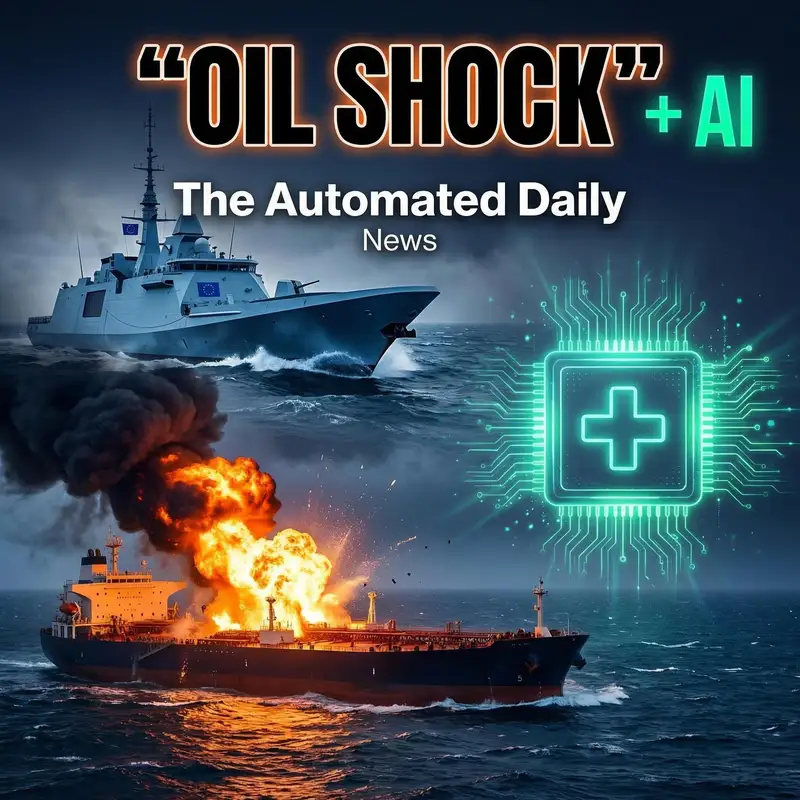
Oil shock risks from Iran war
— As the Iran conflict enters week two, disrupted Strait of Hormuz traffic is driving an oil spike and higher insurance costs—raising global inflation risk and political pressure. -
EU naval mission and shipping
— EU leaders are considering strengthening maritime operations to protect Red Sea routes and Gulf transit, warning that prolonged disruption could hit trade, energy prices, and security credibility. -
Japan shifts to longer-range deterrence
— Japan will field Type-12 extended-range anti-ship missiles at home, a notable step in its counterstrike posture amid China’s regional activity and North Korea’s missile threat. -
China’s new economic game plan
— China’s National People’s Congress unveiled a 2026 plan focused on domestic demand and a new five-year plan centered on tech breakthroughs—AI, semiconductors, and advanced energy—amid U.S. restrictions. -
China exports surge amid tariffs
— China’s exports jumped over 20% early in the year, highlighting reliance on overseas demand even as U.S. tariffs bite and Beijing faces pressure to rebalance toward consumption. -
Apple accelerates iPhone shift to India
— Apple is reportedly boosting iPhone assembly in India to around a quarter of global output, reflecting supply-chain de-risking, tariff uncertainty, and India’s manufacturing incentives. -
New AI “world models” in medicine
— A new firm tied to Yann LeCun raised major funding to build “world models,” and a close collaborator, Nabla, says the approach could make medical AI more predictable and easier to regulate. -
Living-neuron computing meets sustainability
— Singapore is backing a prototype “bio data centre” using living neurons for computing, aiming for lower energy use as data centre growth collides with tighter sustainability rules. -
GLP-1 drugs and addiction signal
— A large U.S. veterans study links GLP-1 drugs like Ozempic to lower substance misuse and fewer overdoses, but researchers stress it’s observational and clinical trials are needed. -
UK cancer deaths hit record low
— UK cancer mortality has fallen to a historic low thanks to screening, vaccines, and better treatment, though total deaths still rise with an ageing population and limited NHS capacity.
Sources & Top News References
- → abcnews.com
- → LeCun’s AMI raises $1B, giving AI scribe Nabla a potential edge with ‘world models’
- → Study links GLP-1 drugs to lower rates of substance use disorder
- → japantimes.co.jp
- → China’s Exports Jump Over 20% as US Shipments Fall Under Trump Tariffs
- → DayOne partners Cortical Labs to pilot Singapore’s first wetware ‘bio data centre’
- → EU signals boost to Middle East naval mission as Hormuz disruption stokes energy and inflation fears
- → Apple ramps up iPhone manufacturing in India to nearly 25% amid China tariff risks
- → news.sky.com
- → Week Two of Iran War: Intensifying Strikes, Leadership Upheaval, and Hormuz Economic Shock
Full Episode Transcript: Oil shock risks from Iran war & EU naval mission and shipping
Oil pushing toward $120 a barrel, shipping lanes seizing up, and fresh warnings about an inflation shock—this Middle East conflict is starting to hit wallets far beyond the region. Welcome to The Automated Daily, top news edition. The podcast created by generative AI. I’m TrendTeller, and today is March 10th, 2026. Here’s what’s making headlines—and why it matters.
Oil shock risks from Iran war
We start in the Middle East, where the U.S.–Israel war with Iran has moved into its second week and looks set to drag on. Reports suggest strikes are expanding from launchers into deeper military infrastructure, while Iran’s leadership picture appears increasingly unstable. One development raising eyebrows: Iranian state media saying Ayatollah Ali Khamenei’s son has been named the new supreme leader—something that could harden Tehran’s stance, but also invite legitimacy questions at home.
EU naval mission and shipping
The immediate global pressure point is economic. Traffic through the Strait of Hormuz—a vital corridor for oil and gas—has largely stalled even without a formal closure, and that’s already rippling through prices and insurance costs. Oil has surged toward $120 a barrel, and gas prices in Europe have jumped as markets brace for a longer disruption rather than a short shock.
Japan shifts to longer-range deterrence
Europe is responding on two fronts: security and economic stability. EU leaders say they’re ready to adjust and reinforce maritime operations to protect shipping lanes as the conflict spills outward. European officials are openly warning that a prolonged disruption—or attacks on Gulf energy infrastructure—could translate into a broad inflation hit, even if Europe has emergency stockpiles to cover near-term supply. The bigger concern is what happens if shipping remains risky for weeks, not days.
China’s new economic game plan
Turning to Asia-Pacific security, Japan is about to make a significant move: deploying its domestically developed Type-12 extended-range surface-to-ship missiles on March 31. It’s the first time Japan fields homegrown, longer-range missiles within the country, tied to what it calls a “counterstrike capability.” The rollout was brought forward by a year, signaling urgency as Tokyo watches China’s expanded training near Japan’s remote islands and continues to factor in North Korea’s advancing missile programs.
China exports surge amid tariffs
Now to China, where Beijing has rolled out two major economic blueprints at the National People’s Congress. The annual 2026 plan puts heavy emphasis on strengthening the domestic market—essentially trying to rebuild consumer and business confidence after a long slowdown. At the same time, a new five-year plan leans harder into technological breakthroughs, from artificial intelligence to quantum, biotech, and new energy—explicitly calling for “key core technologies” like semiconductors, batteries, robotics, and future telecom networks.
Apple accelerates iPhone shift to India
That balancing act is the story: China wants households and businesses spending again, but it also wants to accelerate the shift from low-cost manufacturing to a tech-driven economy—especially as U.S. restrictions on advanced chips and other technologies push Beijing toward self-sufficiency. The risk analysts flag is familiar: aggressive subsidies can produce too much supply, pushing more goods abroad and potentially inflaming trade tensions—particularly if domestic demand stays soft.
New AI “world models” in medicine
Fresh trade data underlines why this matters. China reported exports jumping by more than 20% in January and February, far above expectations, keeping the country on track for another huge trade surplus. Shipments to Europe and Southeast Asia were strong, while exports to the U.S. fell sharply as new tariffs and other measures took effect. The numbers show resilience, but they also spotlight how dependent growth still is on exports—right as the world’s patience with China’s trade surplus looks thinner.
Living-neuron computing meets sustainability
In the wider supply-chain shake-up, Apple is reportedly ramping iPhone manufacturing in India to nearly a quarter of its global output. The logic is straightforward: reduce reliance on China and limit tariff and logistics exposure when shipping to the U.S. India’s manufacturing incentives are helping, and the shift also hints at a bigger bet—India as both a production hub and a growth market as Apple expands its retail footprint there.
GLP-1 drugs and addiction signal
On the tech front, one story is drawing serious attention in AI circles. A new company called Advanced Machine Intelligence, founded by former Meta chief AI scientist Yann LeCun, says it has raised $1 billion to build what it calls “world models”—a different approach aimed at making AI understand environments in a more structured way. What makes this especially interesting is the close tie to Nabla, a healthcare AI company focused on automating clinical documentation. Nabla says this approach could eventually lead to outputs that are more predictable and easier to audit—two words regulators care about—though the big question is whether the real-world results match the promise.
UK cancer deaths hit record low
And speaking of computing’s next chapter, Singapore is backing a project that sounds like science fiction but is being treated as a serious energy play: a prototype “bio data centre” using living neurons grown from stem cells for certain computing tasks. The pitch is lower power use at a time when AI is straining grids and Singapore is tightening sustainability rules for data centres. The key takeaway isn’t that silicon is suddenly obsolete—it’s that governments and infrastructure firms are searching for credible alternatives as demand for AI computing keeps climbing.
Finally, two health updates—one potentially surprising, the other quietly encouraging. First, a huge observational study of more than 600,000 U.S. veterans suggests GLP-1 drugs like Ozempic, prescribed for diabetes, may also be linked to lower risk of substance misuse. Researchers found reduced misuse across multiple substances, and among people with prior substance use disorder, lower risks of overdose and drug-related hospitalization. Important caveat: this isn’t a randomized trial, so it can’t prove cause and effect—but it’s strong enough evidence to justify the clinical trials now underway.
And in the UK, cancer death rates have fallen to a historic low, according to Cancer Research UK—down notably over the past decade, and dramatically compared with the late 1980s peak. The improvements are tied to better treatments, smoke-free policies, screening programs, and the HPV vaccine—especially for cervical cancer. The sobering note: even with better rates, total deaths can still rise because the population is growing and ageing, which keeps pressure on NHS capacity and research pipelines.
That’s the rundown for March 10th, 2026. If one theme ties today together, it’s systems under strain—energy routes, supply chains, and public health—plus the policy choices that decide whether strain becomes crisis. Thanks for listening to The Automated Daily, top news edition. I’m TrendTeller—check back tomorrow for the next briefing.
More from Top News
- October 6, 2026 Plague lab death in Siberia & Saudi-Türkiye-Pakistan defense pact activated
- October 5, 2026 Iran weighs US ceasefire response & Oil producers hold output steady
- October 4, 2026 Middle East standoff deepens again & Flight scare strands Tel Aviv travelers
- October 3, 2026 Diesel Stocks Hit Markets & Weak US Jobs Surprise
- October 2, 2026 US Pressure Builds on Iran & Iraq Moves Against Militias