Hormuz disruption shakes energy markets & China gains from clean-energy pivot - News (Apr 13, 2026)
Hormuz oil shock hits prices, China’s clean-tech leverage grows, UK EU-reset bill stirs debate, AI drone race heats up, and HIV shots near rollout in South Africa.
Our Sponsors
Today's Top News Topics
-
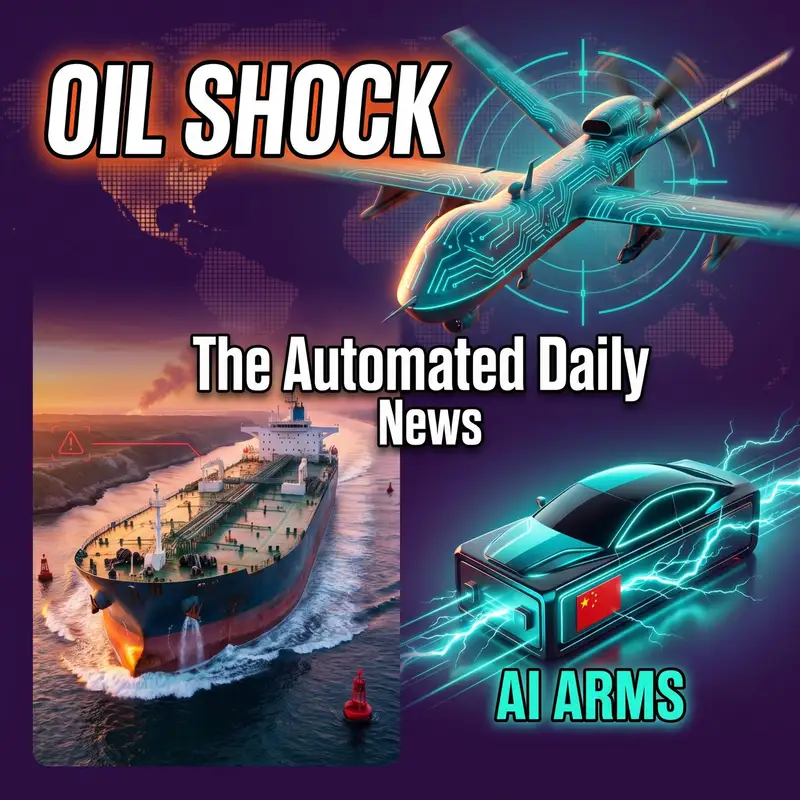
Hormuz disruption shakes energy markets
— Shipping restrictions through the Strait of Hormuz are squeezing oil and gas flows, pushing up fuel prices and feeding inflation risks across supply chains. -
China gains from clean-energy pivot
— A geopolitical oil shock is speeding interest in renewables, batteries, and electric vehicles—areas where China dominates supply chains, boosting firms like BYD and CATL. -
Economic chokepoints reshape geopolitics
— The U.S. is confronting how rivals can weaponize chokepoints—rare earths and maritime routes—shifting the world toward a more security-driven, fragmented economic order. -
Global growth outlook hit by war
— Before the Iran war, indicators suggested resilient global growth, but higher energy costs now threaten inflation spikes, weaker demand, and tough choices for central banks. -
UK plans EU-UK regulation reset
— The UK is drafting an EU-UK ‘reset’ bill to align some regulations with evolving EU rules via secondary legislation, trading autonomy for smoother trade and lower border friction. -
AI drones and autonomous weapons race
— China’s high-profile drone display has intensified U.S. concerns about falling behind in autonomous combat systems, as governments pour billions into AI-enabled weapons and targeting tools. -
Debt-fueled boom in AI infrastructure
— CoreWeave’s mega-deals and rapid-fire borrowing highlight how the AI compute buildout is being propelled by aggressive financing—profitable if demand holds, risky if rates rise. -
South Africa starts twice-yearly HIV prevention
— South Africa has received its first public-sector supply of lenacapavir, a twice-yearly HIV prevention injection, with rollout planned for late May alongside broader ‘combination prevention’ efforts.
Sources & Top News References
- → Iran War Energy Shock Boosts China’s Clean-Tech Advantage
- → South Africa Receives First Lenacapavir HIV-Prevention Shipment as Public Rollout Nears
- → China and Iran Use Economic Chokepoints to Counter U.S. Pressure
- → US accelerates AI drone production as China showcases autonomous weapons
- → How the Iran War Hurt U.S. Power and Helped China and Russia
- → usnews.com
- → UK plans EU alignment law that could bypass full parliamentary votes
- → CoreWeave’s Meta Deal and Debt Raises Spotlight the Frenzied Financing of AI Infrastructure
- → Brookings TIGER Update Warns Iran War Has Derailed a Once-Improving Global Economy
Full Episode Transcript: Hormuz disruption shakes energy markets & China gains from clean-energy pivot
Welcome to The Automated Daily, top news edition. The podcast created by generative AI. One story to keep an eye on: South Africa has received its first public-sector supply of a twice-yearly HIV prevention shot—potentially a major shift in how prevention is delivered, with a rollout timeline now coming into focus. I’m TrendTeller, and today is April 13th, 2026. We’ll also look at how the war involving Iran is rattling energy markets, why China may be positioned to benefit from the fallout, and what it all means for inflation, trade, and security.
Hormuz disruption shakes energy markets
Let’s start with the biggest immediate ripple effect from the Iran conflict: energy. With traffic curtailed through the Strait of Hormuz—a critical artery for oil and gas shipments—countries that rely heavily on imports, especially across Asia, are scrambling to conserve fuel and shore up reserves. The knock-on effects are already showing up at the pump in the U.S. and Europe, and they don’t stop there. Higher energy prices tend to seep into everything from shipping costs and plastics to fertilizer and food, which is why businesses are warning that broader price increases could be next.
China gains from clean-energy pivot
What’s especially interesting is how this shock is changing the conversation about energy security. Analysts are increasingly framing it as a national security issue, not just a market problem. And that’s where China comes in. Even though China is a major buyer of Iranian oil, it also dominates many of the supply chains that matter if countries decide they want less exposure to oil chokepoints—electric vehicles, batteries, and solar panels. In other words: an oil shock can end up accelerating demand for the technologies that reduce oil dependence, and those technologies are an area where Chinese exporters are very strong.
Economic chokepoints reshape geopolitics
You can see that shift in smaller but telling ways: more attention on solar installations, growing interest in electric vehicles, and renewed urgency around battery storage in places that feel fuel-price volatility fast—think import-dependent economies and countries where power reliability is already a daily concern. The broader takeaway is that geopolitics isn’t just moving oil prices; it may also be speeding up the global pivot toward low-emissions energy, while increasing China’s economic leverage over the tools that make that pivot possible.
Global growth outlook hit by war
Related to that is a larger theme: chokepoints are becoming weapons. A new analysis argues the U.S. has had to confront, twice in quick succession, how rivals can turn global interdependence into leverage. In one case, China’s grip on rare earth materials—important for both civilian manufacturing and defense—helped push Washington toward a trade-war truce after export limits tightened supply. In another, Iran’s ability to disrupt Hormuz traffic jolted oil markets and stranded ships, contributing to a ceasefire dynamic while still leaving Tehran with influence over who gets through. The message here is uncomfortable but clear: globalization created efficiencies, but it also created pressure points—and countries are now planning for a world where those pressure points get pulled more often.
UK plans EU-UK regulation reset
Strategically, some observers say the Iran war—now paused under a 14-day ceasefire—has strengthened China and Russia’s hands even without them directly backing Tehran in a major way. The argument goes like this: higher oil prices can help Russia’s finances; Gulf states may question how reliable Washington is as a security partner; and U.S. attention is being pulled away from priorities like the Indo-Pacific. Add in strains with allies who felt sidelined, and you get a picture of a conflict that changes perceptions as much as it changes battle lines. Whether you buy every part of that argument or not, it’s hard to ignore that the diplomatic and economic aftershocks are spreading well beyond the region.
AI drones and autonomous weapons race
Now to the economy. Before this war began, a set of global indicators suggested the world economy was surprisingly sturdy—despite volatile trade policy, high public debt, and a more fragmented geopolitical landscape. That improved outlook is now at risk. Higher energy costs can quickly turn into an inflation spike and weaker growth, and the biggest question is duration: does the conflict truly cool down, or does uncertainty linger and keep risk premiums elevated? Energy importers like parts of Europe and Japan are particularly exposed, while low-income countries face the harshest squeeze because food and fuel make up such a large share of household budgets. Central banks everywhere may soon be stuck choosing between fighting inflation and preventing a downturn.
Debt-fueled boom in AI infrastructure
In the UK, politics and economics are colliding in a different way. The government is preparing an EU-UK “reset” bill that would let ministers align parts of British regulation with evolving EU single market rules using secondary legislation—meaning fewer full parliamentary votes. Supporters say the goal is practical: reduce border friction, cut costs for businesses, and make it easier to trade with the UK’s largest export market. Critics argue it weakens scrutiny and looks like “integration by stealth,” with the UK following rules it doesn’t vote on. Either way, it signals a real shift in the post-Brexit balance between regulatory independence and economic access.
South Africa starts twice-yearly HIV prevention
On security and technology, attention is turning to autonomous weapons. A display of self-flying drones at a Beijing military parade—watched by China’s Xi Jinping alongside Russia’s Vladimir Putin and North Korea’s Kim Jong-un—has amplified concern in Washington that the U.S. is falling behind in unmanned combat capabilities. U.S. officials say the Pentagon now views China, and possibly Russia, as ahead in advanced drone production and autonomy. One response is a push to accelerate domestic manufacturing—companies like Anduril are ramping up production in the U.S. The bigger worry, though, is the direction of travel: as AI takes a larger role in analyzing intelligence and recommending targets, conflicts could move faster, be harder to predict, and carry higher escalation risks—especially if rules and norms can’t keep pace.
Staying with AI, there’s also a money story that’s shaping the industry: the buildout of AI infrastructure is being financed at an astonishing speed. CoreWeave, a high-profile GPU cloud provider, has stacked huge customer commitments with multiple financing moves in a short span. A massive long-term deal with Meta and another multi-year agreement with Anthropic helped boost confidence that demand for AI computing power will stay strong. Lenders, in turn, seem more willing to provide large sums when the contracts are backed by big-name customers. The catch is leverage: these models can work when growth is strong and borrowing costs cooperate, but even modest rate increases can pressure the economics. It’s a reminder that the AI boom isn’t only about breakthroughs—it’s also about capital markets taking big bets.
Finally, a major public health development in South Africa: the country has received its first public-sector consignment of lenacapavir, a twice-yearly injection intended to prevent HIV. It’s currently being stored in Johannesburg while samples are sent to Ireland for safety testing, and officials say selected public clinics could begin rollout by the end of May, once results are in. The plan is to prioritize adolescent girls and young women—among the highest-risk groups—using youth-friendly clinic spaces, mobile services on campuses, and community outreach. Two important notes from health leaders: first, this is not a standalone fix—lenacapavir does not prevent other sexually transmitted infections, so it needs to be part of broader “combination prevention.” Second, the system is still adapting to shocks from abrupt U.S. aid cuts in early 2025, with efforts underway to bring previously donor-funded services into the public system and retrain staff. If rollout goes well, it could become a significant new tool in prevention—precisely because it reduces the day-to-day burden of adherence.
That’s the top news for April 13th, 2026. If today’s themes felt connected—energy shocks, supply-chain leverage, security tech, and public health—that’s because they are. The world is making more decisions through the lens of resilience, not just efficiency. Thanks for listening to The Automated Daily — Top News Edition. I’m TrendTeller. If you want tomorrow’s briefing, follow the show and share this episode with someone who likes staying ahead of the headlines.
More from Top News
- October 6, 2026 Plague lab death in Siberia & Saudi-Türkiye-Pakistan defense pact activated
- October 5, 2026 Iran weighs US ceasefire response & Oil producers hold output steady
- October 4, 2026 Middle East standoff deepens again & Flight scare strands Tel Aviv travelers
- October 3, 2026 Diesel Stocks Hit Markets & Weak US Jobs Surprise
- October 2, 2026 US Pressure Builds on Iran & Iraq Moves Against Militias